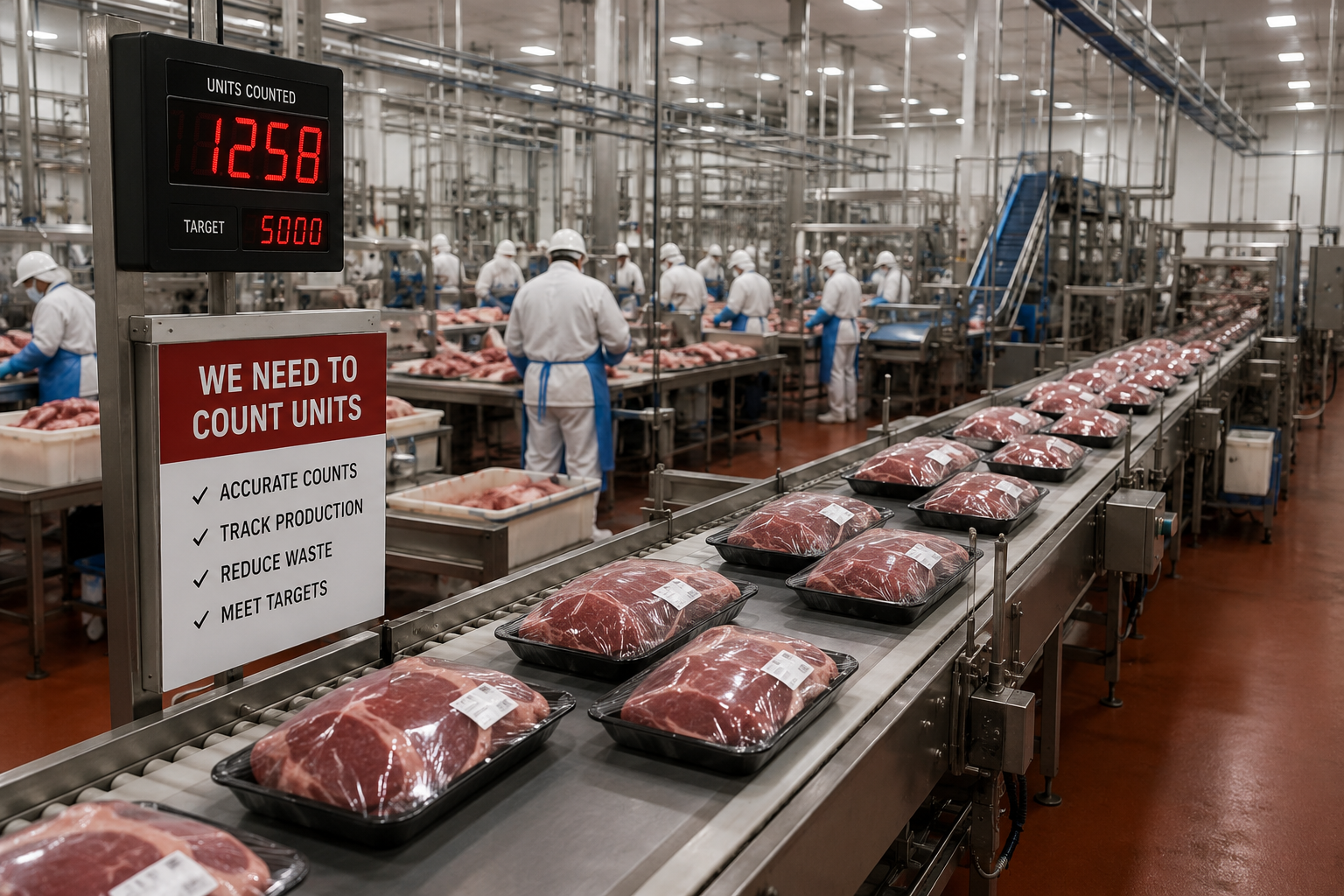
Food processing manufacturing
AI vision for food manufacturing productivity
visionAI helps food manufacturers, meat and poultry processors, greenhouse packhouses, and food packaging operations improve production efficiency, reduce waste, and strengthen food safety compliance using existing camera infrastructure
Food processing manufacturing
AI vision for food manufacturing productivity
visionAI helps food manufacturers, meat and poultry processors, greenhouse packhouses, and food packaging operations improve production efficiency, reduce waste, and strengthen food safety compliance using existing camera infrastructure
Trustedacross global food production environments
Used by food manufacturers operating high-volume processing and packaging lines
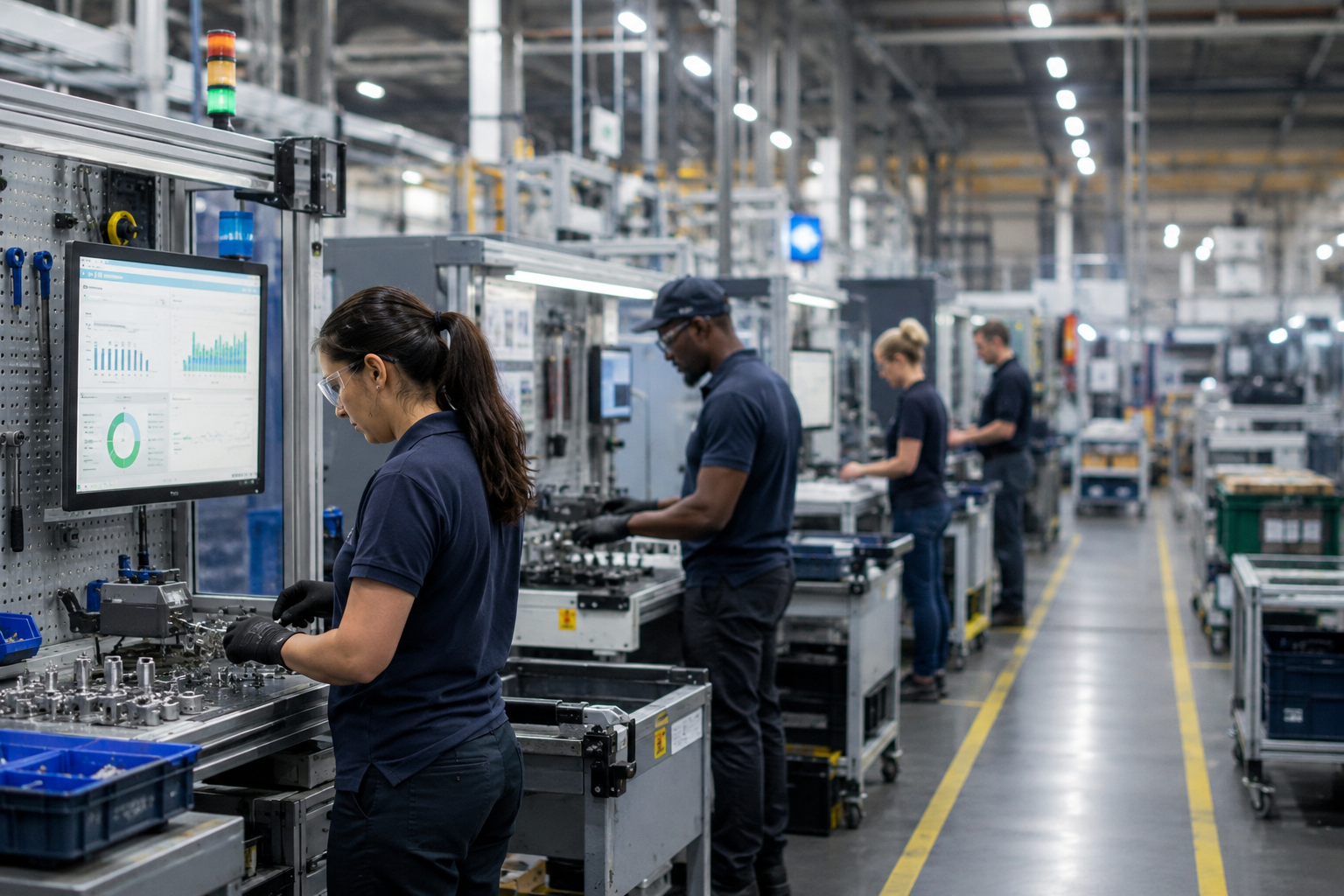
Deployed in labor-intensive production environments where operator productivity directly impacts throughput
Designed for operations requiring strict food safety and regulatory compliance
Food processing manufacturing is under pressure
Food manufacturing is one of the most operationally complex industries in the world. Producers must deliver high volumes of consistent product while maintaining strict food safety standards and controlling costs.
However, many production environments remain operationally blind to what actually happens on the factory floor.
Your key challenges:
Labor shortages and rising labor costs
Food production, especially in meat, poultry, and produce facilities, still relies heavily on operator efficiency. With labor shortages in the United States and rising costs in Europe, manufacturers must boost output, sustain production with fewer workers, and improve productivity without compromising food safety, yet many still lack the operational intelligence to optimize performance.
Production data gaps
Most food manufacturers have clear production targets – they know how much needs to be produced, expected production rates, and order commitments – but they struggle to pinpoint when production actually started, why rates slowed, where losses occurred, and what operators were doing during idle periods. While traditional systems capture machine data, many inefficiencies lie in human processes that machines cannot measure.
Food safety and regulatory pressure
Food safety compliance is critical across global markets, with regulations like the Food Safety Modernization Act (FSMA) in the United States requiring strict monitoring of production environments. Producers must demonstrate HACCP compliance, sanitation and hygiene standards, traceability, and proper packaging and labeling, yet many checks still rely on manual processes and periodic inspections, leaving gaps in operational visibility.
Packaging quality and brand risk
Food packaging failures can seriously impact consumer safety and brand reputation, with issues such as incorrect labels, missing dates, damaged seals, or wrong packaging formats potentially leading to regulatory recalls, product withdrawals, social media backlash, and lasting brand damage.
Hidden production losses
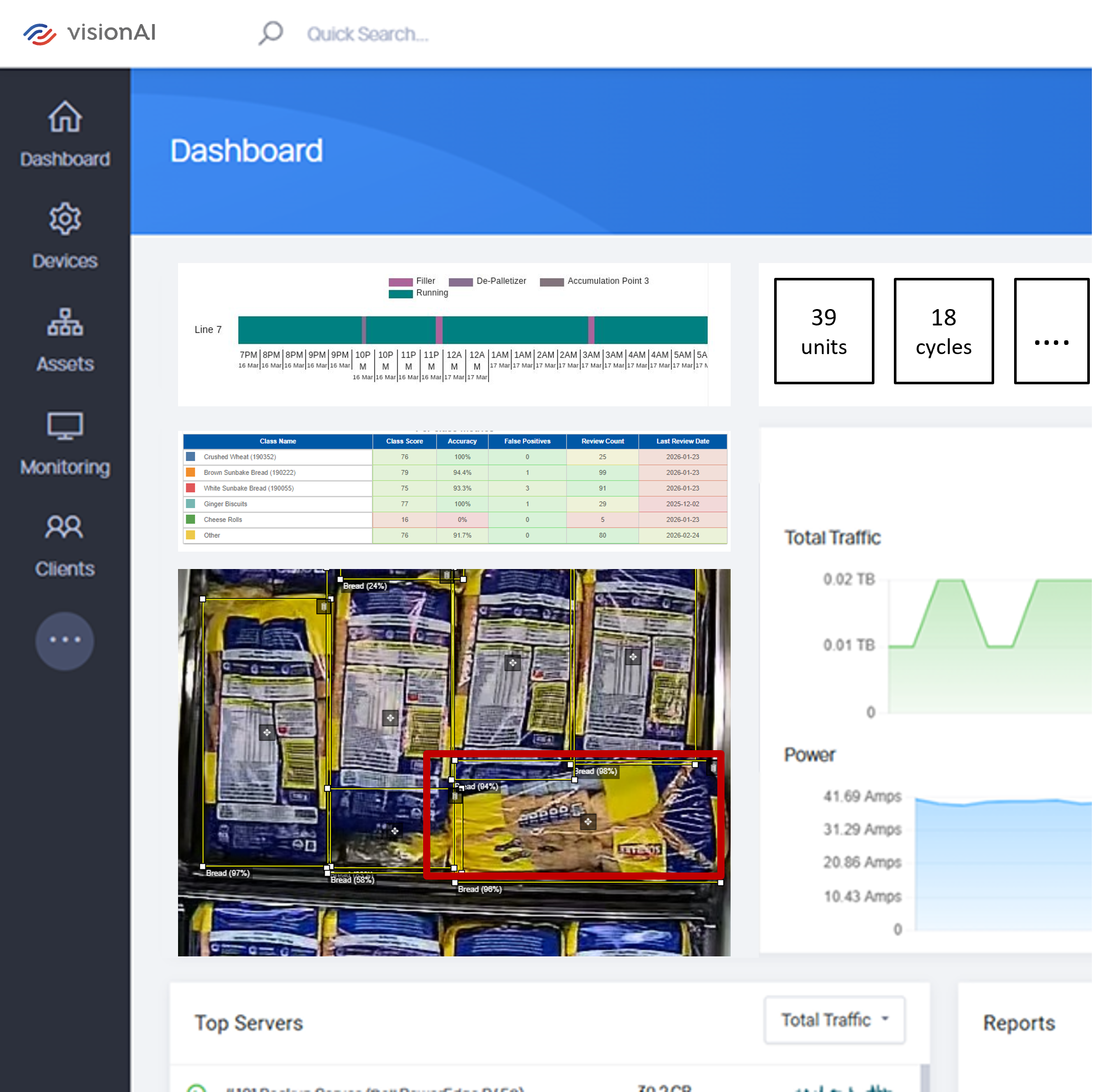
Many small inefficiencies accumulate throughout a production shift – such as empty raw material dispensers, missing packaging materials, supply interruptions, operators waiting for product, and idle packing stations – yet while these issues are clearly visible to cameras, they are often difficult to capture in traditional data systems.
How visionAI improves food manufacturingproduction efficiency
OEE+ for food production
Traditional OEE focuses primarily on equipment performance.
visionAI enhances OEE by providing visibility into human-driven production efficiency.
Capabilities include:
- Production start time verification
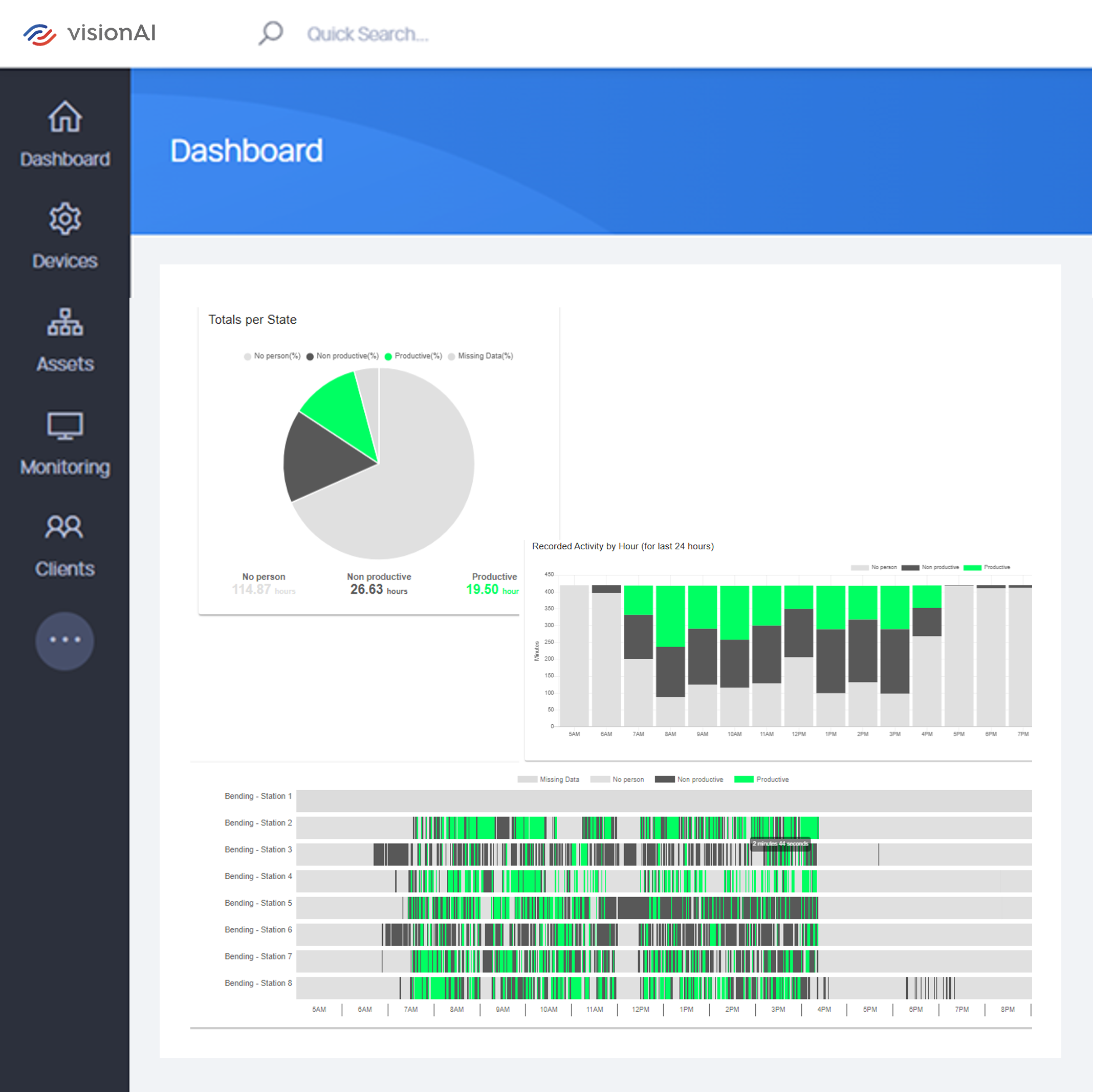
- Operator productivity measurement
- SKU-level throughput comparisons
- Production rate monitoring
- Idle time detection across shifts
This gives manufacturers a clearer understanding of why performance changes during production runs.
Visual root cause analysis
Many production losses are caused by visual events that machines cannot detect.
visionAI continuously observes the production environment to identify operational root causes affecting productivity.
Examples include:
- Raw material supply interruptions
- Empty ingredient dispensers
- Empty tray or box dispensers
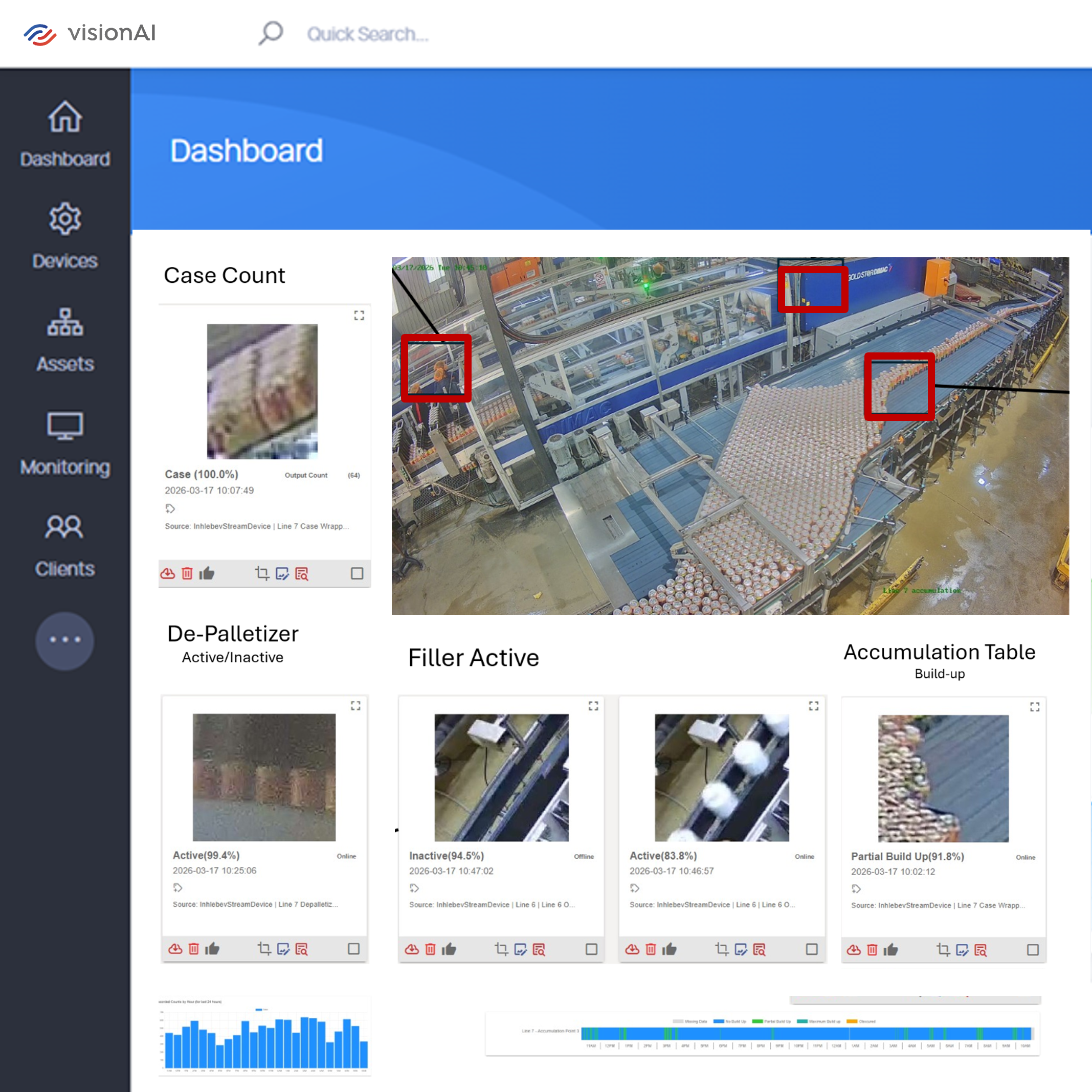
- Product backlog accumulation
- Packing station bottlenecks
By identifying these events early, operations teams can intervene quickly and recover lost production capacity.
Operator productivity and cycle time measurement
In many food production environments, operator efficiency determines total line throughput.
This is particularly true in meat cutting lines, poultry processing, fruit and vegetable packing and manual packaging operations.
visionAI measures:
- operator cycle times
- packing throughput per station
- idle vs productive time
- shift performance comparisons
Why visionAI?
Know what went wrong – but most importantly, why.
visionAI partners with the most credible authorities globally to build a product that your production line can rely on.
Proven
at scale
Deployed in large, high-volume baking and ingredient manufacturing environments worldwide.
American Bakers Association
Active member, staying aligned with U.S. wholesale baking trends and regulatory developments.
Peter Reid presents at IBIE Las Vegas 2025
“AI vision is no longer a future concept – it’s driving measurable efficiency and reducing waste on 24/7 bakery lines today.”
Peter Whalley presents at the Australian Baking Show 2025
“Reducing waste and improving line efficiency isn’t about replacing skilled bakers – it’s about giving them AI-powered visibility to make smarter decisions in real time.”
Your cameras are already watching ... now unlock them for full food processing manufacturing efficiency
Insightsfrom the food processing production line
MES ERP integration: Connecting Manufacturing Execution Systems to ERP
From first convention to first principles: The 2026 American Bakers Association Annual Convention
Manufacturing execution system (MES) vs MIS: Why AI is the missing layer
Ready to eliminate your food production blindspots?
From labor shortages and food safety pressure to hidden production inefficiencies, visionAI gives food manufacturers the real-time visibility needed to operate more efficiently and with greater confidence.
Frequently asked questions
How does visionAI help with FSMA and HACCP compliance?
visionAI uses existing camera networks to provide continuous visual monitoring at critical control points. It helps identify potential risks, such as pest activity, PPE non-compliance, or missed hygiene steps, and creates a digital evidence trail that supports FSMA and HACCP programs.
Can AI vision reduce industrial food waste in large-scale bakeries?
Yes. Unlike traditional quality inspection systems that only react to ruined final products, visionAI identifies visual root causes upstream. By detecting issues like double dough, empty pans, pan jams, and dough build-up before they reach the oven, manufacturers can significantly reduce wastage. This is critical for Australian manufacturers facing the 2026 FOGO Waste Mandate and U.S. bakers looking to protect their margins.
Does visionAI require expensive new machinery to monitor OEE?
No. One of the primary advantages of visionAI is that it uses your existing camera infrastructure. This eliminates the heavy CAPEX costs associated with traditional, machine-dependent vision systems. Our platform provides OEE+ for Baking, offering SKU-level line efficiency monitoring and productivity metrics without the need for specialized, single-point hardware.
How does the system address the Big Labor and skills shortage?
In a “Big Labor” crisis, visionAI acts as a digital supervisor that supports your existing workforce. It automates the monitoring of Operator SOP compliance—such as proving time adherence and manual inspection policies—allowing your team to focus on high-value tasks while the AI ensures that production volumes and quality standards are maintained 24/7.
How does visionAI protect against crate loss and supply chain theft?
For Wholesale Baking operations in developing markets or high-volume regions, bread is a commodity prone to syndicate theft. visionAI monitors the dispatch, delivery, and return processes. By tracking product, crate, and trolley stock in real-time, the system reduces “shrinkage” and provides visibility into collusion or unauthorized stock diversion.