

The real problem: manufacturers are still operating blind
Most manufacturers are still fixing problems long after they’ve already cost money. That’s why manufacturing OEE improvement is a hot topic in every industry segment today.
A line slows down. A batch goes out of spec. A shift underperforms. By the time someone investigates, the issue has already repeated dozens of times.
Now imagine the bottom-line impact if you could catch those failures as they happen using real-time manufacturing analytics to drive manufacturing OEE improvement.
The issue isn’t visibility – it’s when that visibility arrives.
We believe there is a simple fix: CCTV
Most manufacturers already have CCTV across the factory floor, but it’s massively underutilized.
With AI layered on top, it can surface real-time insights into downtime, wastage, idle time, and line stoppages – turning existing infrastructure into a driver of manufacturing OEE improvement.
But there’s a catch.
For many, this immediately raises a red flag:
“Is this a big brother project?”
It’s a fair question – and exactly what we need to address next.
What camera-based monitoring actually does (and doesn’t do)
Camera-based factory floor monitoring systems using industrial computer vision don’t watch people – they interpret operations.
They:
- Detect events (stoppages, delays, interventions)
- Track patterns across time
- Highlight inefficiencies in workflows
- Enable faster root cause analysis in manufacturing
They do not:
- Identify or track individuals
- Score or rank operators
- Act as surveillance tools
This is a shift from observation to understanding.
From “who did it” to “why did it happen”
The “big brother” narrative assumes the goal is accountability at an individual level.
But high-performing manufacturing environments don’t optimize people – they optimize systems.
Because most inefficiencies come from:
- Poor line design
- Bottlenecks between stations
- Inconsistent upstream supply
- Equipment constraints…
…not operator intent.
Focusing on individuals hides the real problem.
Focusing on systems exposes it.
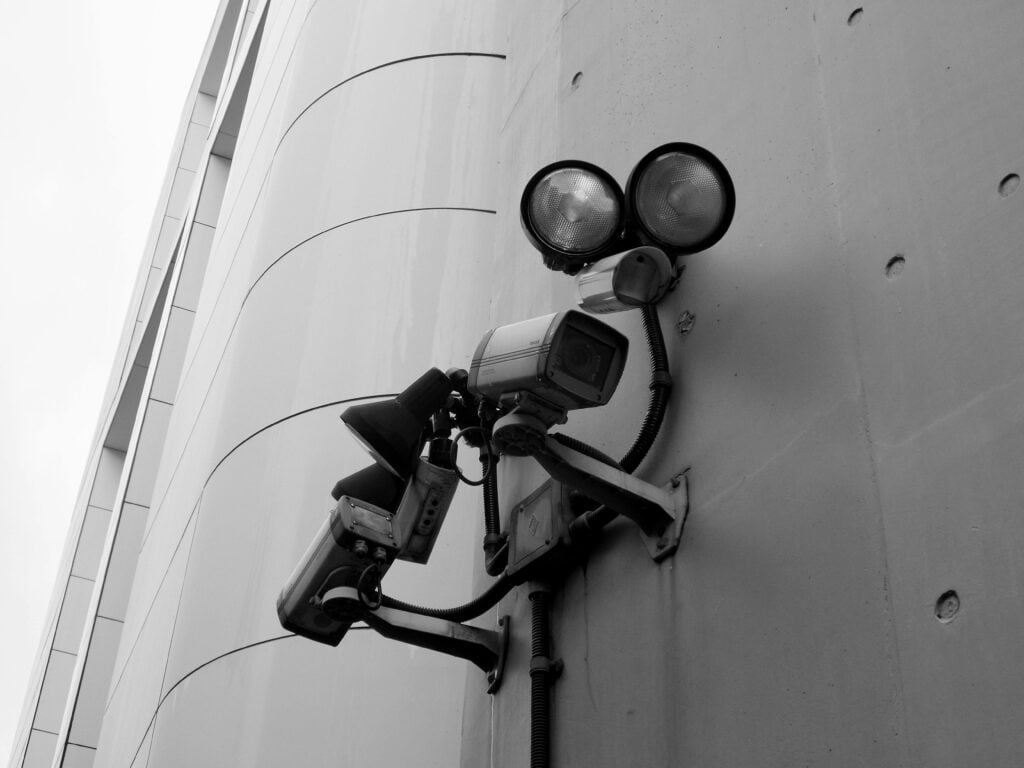
How visual AI protects production line operators
Without objective data, performance conversations become subjective.
And subjectivity leads to blame.
With real-time manufacturing analytics:
- Operators are no longer blamed for system failures
- Constraints become visible and fixable
- Teams align around improving flow, not defending performance
The result?
A more transparent, fair, and effective environment.
From reactive fixes to real-time OEE improvement
Traditional approaches to manufacturing OEE improvement rely on hindsight:
- End-of-shift reporting
- Delayed root cause analysis
- Repeated inefficiencies
Real-time systems enable:
- Immediate detection of downtime
- Faster intervention
- Continuous manufacturing process optimization
- Sustainable ways to reduce downtime in manufacturing
This is where smart factory AI creates measurable impact.
The line that matters: visibility vs surveillance
The difference between “big brother” and operational excellence isn’t the technology – it’s intent and design.
To get it right:
- Focus on events, not identities
- Be transparent about purpose
- Deliver visible operational improvements
When teams see fewer disruptions and smoother workflows, skepticism disappears quickly.
Closing thought
The “big brother” concern assumes the goal is control.
It isn’t.
The goal is clarity.
Because when you can see what’s actually happening on your factory floor, in real time, you stop reacting to problems and start preventing them.
And that’s where true manufacturing OEE improvement happens.