visionAI helps organsations in the auto parts manufacturing sector improve operator productivity, machine utilization, SOP compliance, and quality visibility using existing cameras
Real Time OEE Monitoring to Expose Hidden Performance Losses
auto parts manufacturing
AI vision for auto parts production efficiency
visionAI helps organsations in the auto parts manufacturing sector improve operator productivity, machine utilization, SOP compliance, and quality visibility using existing cameras
Works alongside sophisticated automated manufacturing environments where human-machine interaction still determines performance
Relevant for Tier 1 and Tier 2 component suppliers serving OEM quality, audit, and delivery requirements
visionAI works with customers that are members of major automotive supplier associations
Auto parts manufacturing is under constant pressure
Automotive suppliers operate in one of the most demanding manufacturing environments in the world. Plants must hit exacting delivery schedules, maintain traceable quality, support robotics and automation, and pass frequent customer and quality audits. Yet many production losses still happen in the gap between people and machines.
Your key challenges:
Human-machine blindspots
Traditional systems measure machines well but rarely explain whether the operator followed the required SOP around changeovers, material replenishment, robotic loading, inspection, and exception handling.
Quality and audit pressure
Automotive suppliers must operate within strict quality frameworks such as IATF 16949 and customer-specific requirements, while also complying with product safety and regulatory regimes.
Machine utilization leakage
Cells may appear available, but real utilisation is lost when operators arrive late, wait for material, clear jams slowly, or fail to reset stations quickly.
Traceability of compliance
Plants need evidence that SOPs, layered process audits, and visual checks were followed consistently.
Labour pressure
Even advanced automotive plants remain dependent on people for supervision, loading, feeding, inspection, packaging, and exception handling.
How visionAI improves auto parts manufacturing production efficiency
OEE+ for auto parts manufacturing
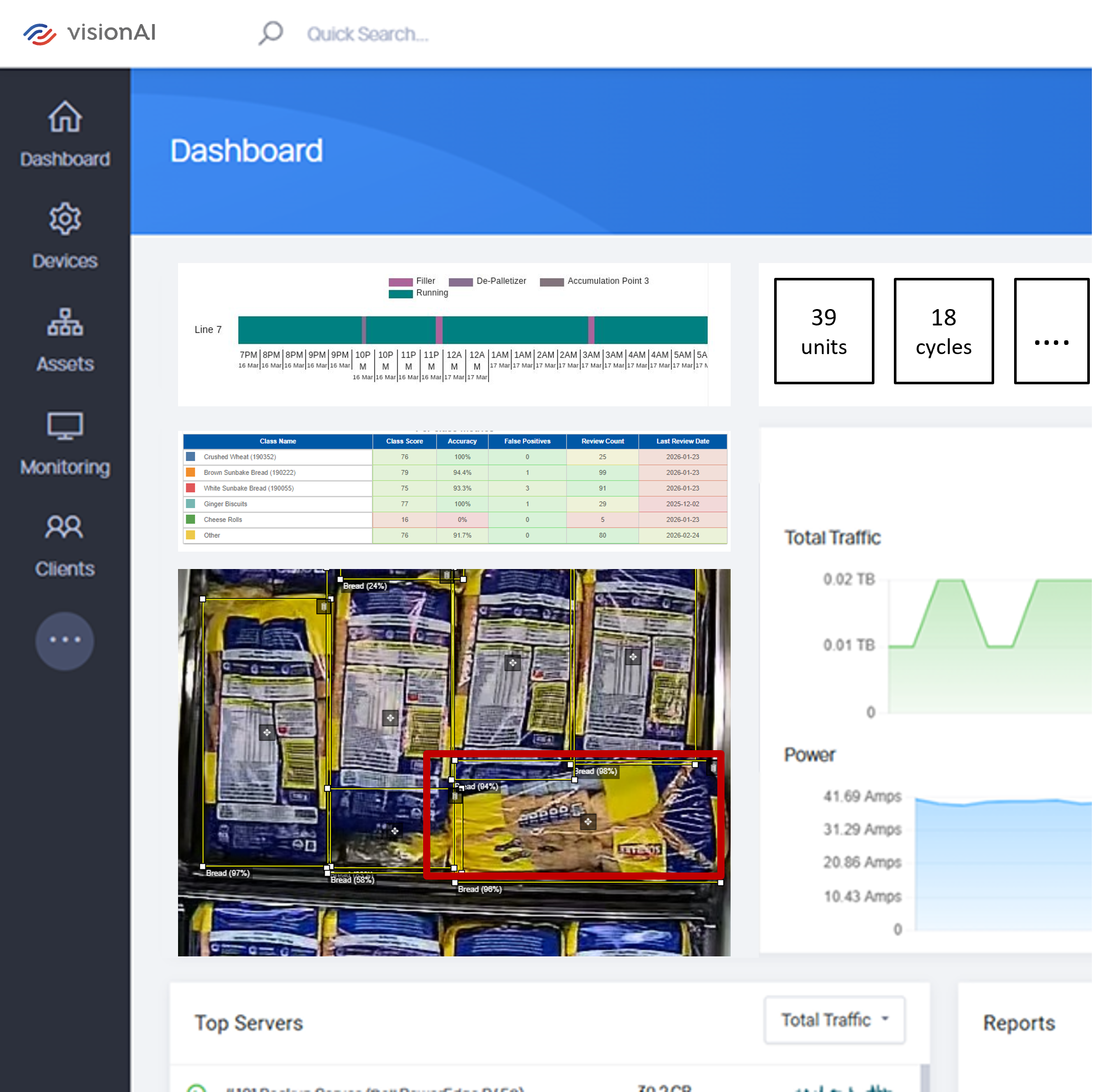
Traditional OEE shows line performance, uptime, and downtime. OEE+ powered by AI vision enhances traditional OEE by showing why performance varies – across operators, processes, and machine interactions.
Machine utilization visibility
See why utilization drops at specific robotic cells, machine tending stations, and semi-automated processes by linking visual context to machine state
Operator productivity insights
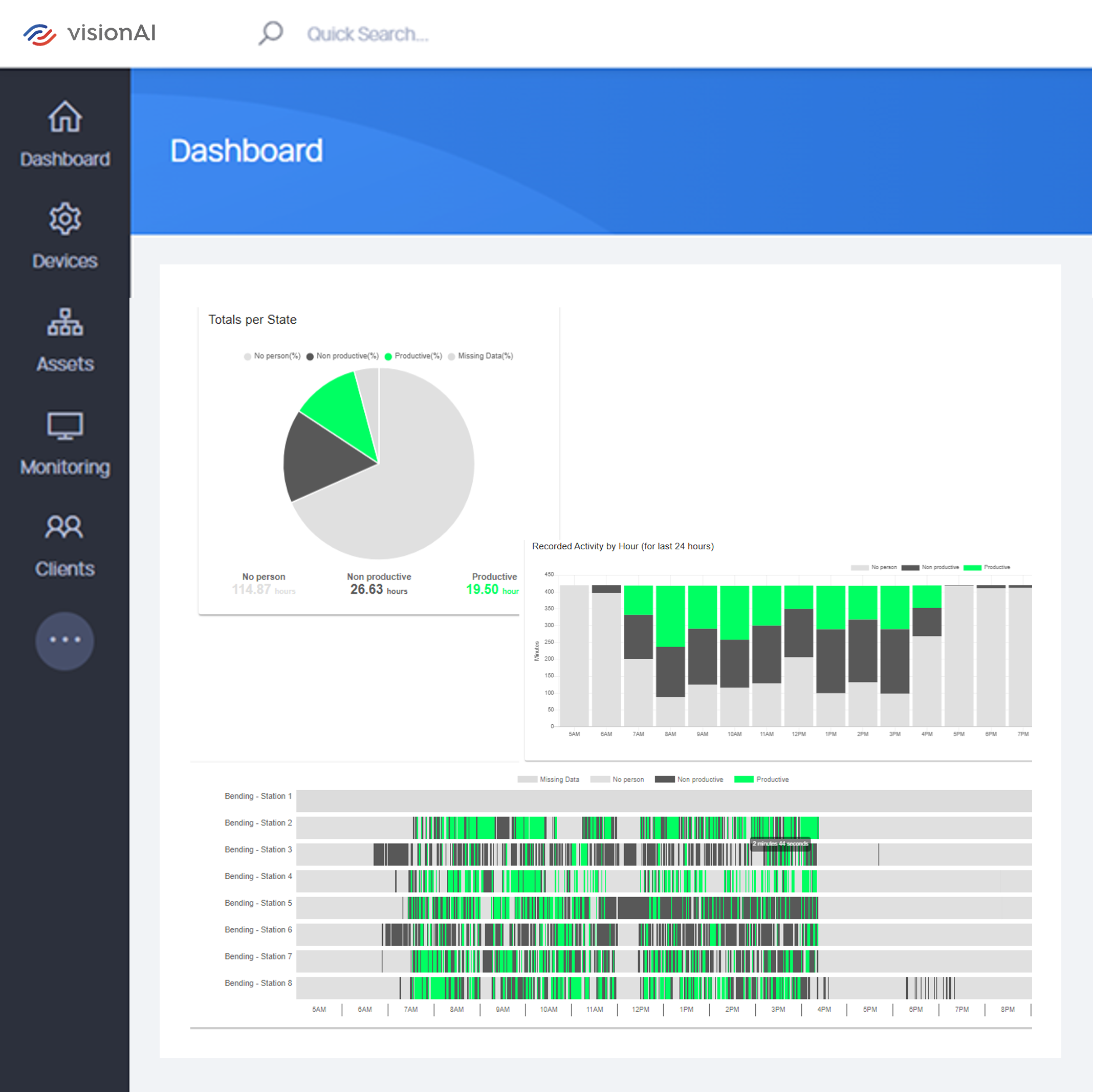
Measure productive versus idle time, cycle adherence, station response times, and changeover discipline across shifts
Robotic and semi-automated process monitoring
Track operator interactions around loading, unloading, machine tending, and manual interventions to understand true line performance.
visionAI observes the visual causes behind lost output, process disruption, and quality escapes – before issues escalate downstream.
Process deviation detection
Use cameras to identify handling deviations, missed manual checks, blocked outfeed, delayed replenishment, slow restarts, and micro-stoppages in real time
Quality visibility and defect context
Observe process behaviours that contribute to defects, scrap or rework, helping teams act earlier and reduce downstream impact
Visual audit trail for investigations
Create a timestamped visual record of what happened before, during, and after an issue to support root cause analysis and continuous improvement
Automation should support people, not replace them. visionAI provides a digital layer of visibility that helps teams work more consistently, safely, and according to standard.
Operator SOP compliance
Monitor whether required operator steps happen in the correct sequence around robotic cells, machine tending, manual checks, and escalation workflows
SOP compliance and audit readiness
Maintain a visual record showing whether checks, handling steps, and line-side standards were followed to support internal quality teams and customer audits
Operational discipline across shifts
Improve consistency in how tasks are performed across teams, shifts, and stations to reduce variation and improve repeatability
Ready to eliminate auto parts production blindspots?
From robotic SOP compliance and operator productivity to machine utilization and quality audit readiness, visionAI gives automotive suppliers the visibility they need to run more efficient, compliant, and predictable operations.
Frequently asked questions
How does visionAI help in highly automated automotive factories?
visionAI complements existing automation by monitoring the human actions around machines, robots, and semi-automated cells that traditional controls do not fully explain.
Can visionAI support IATF 16949 environments?
Yes. visionAI provides continuous visual verification and audit-friendly evidence that can support disciplined process execution, layered audits, and root cause analysis.
Does visionAI replace machine data or MES systems?
No. It adds visual context to machine, SCADA, MES, and ERP data so teams can understand what actually happened.
What automotive components are most suitable?
High-volume components with repeated operator interaction, such as braking, seating, HVAC, wiring, plastics, and final assembly sub-processes, are especially strong fits.